Since 5,000 BCE
I Am
The Fence
Seven thousand years I have stood between wilderness and home. Woven from the living branches of the earth, I am the oldest craft your hands remember.
Hear My Story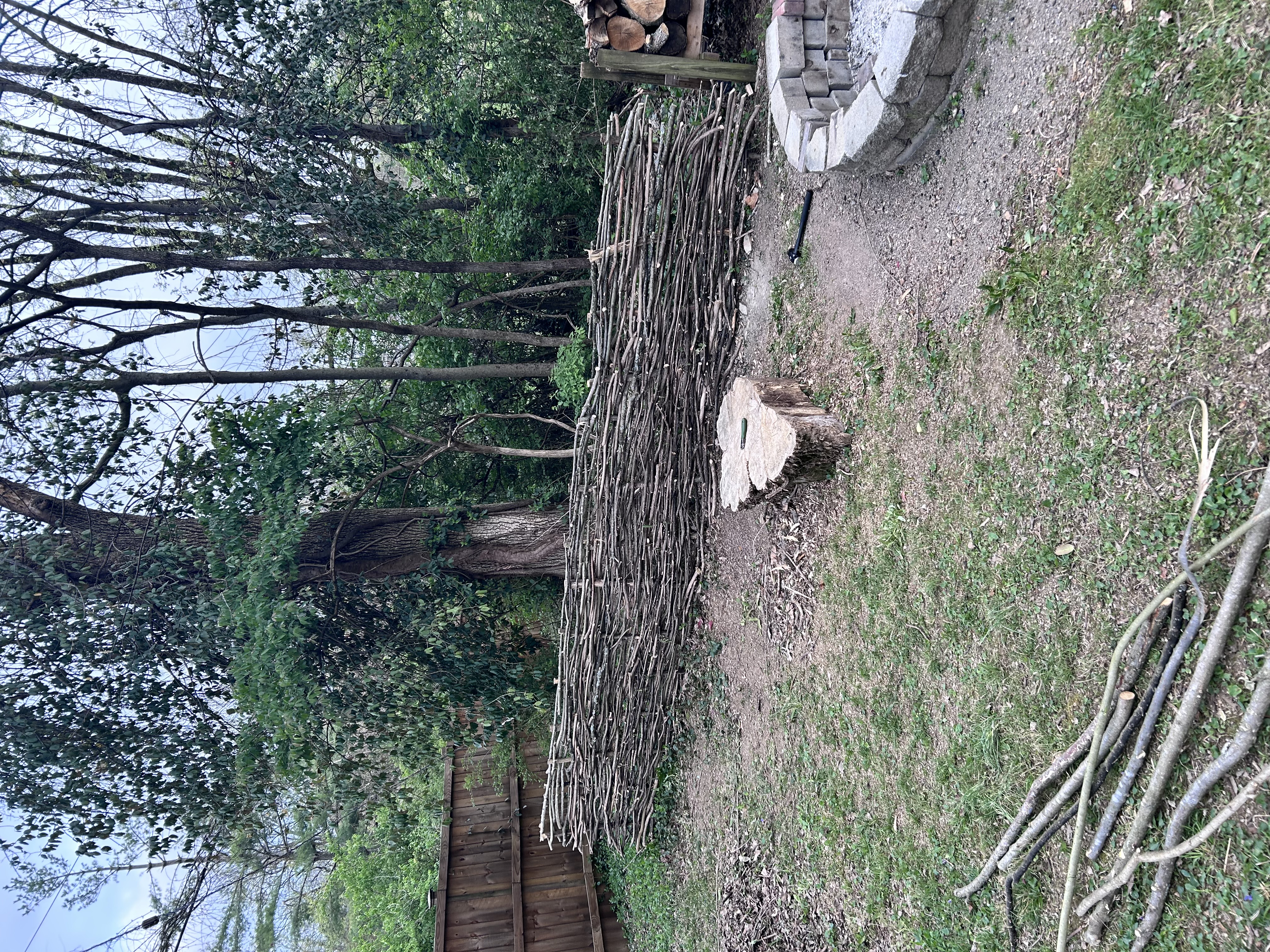
My Origin
Born of Neolithic Hands
Before your pyramids rose from the desert sand, before the first bronze was poured, before the wheel turned its maiden revolution — I was here. I am the wattle fence, and I have been woven by human hands for over seven thousand years.
In the marshlands of ancient Britain, along the river valleys of Mesopotamia, across the vast plains where your earliest ancestors first chose to stop wandering and call a patch of earth their own — there I stood. Not as monument or temple, but as something far more intimate: the boundary between the wild world and the hearth.
My craft is elemental. Take the supple branches of hazel or willow — living wood that bends without breaking — and weave them between upright stakes driven deep into the soil. No nails. No mortar. No tools forged in fire. Just the patient rhythm of hands threading branch through branch, the same motion repeated by your great-grandmothers ten thousand generations removed.
Archaeologists found my remains at the Sweet Track in Somerset, England, dated to 3807 BCE. But I am older still. I was old when that trackway was new. I was ancient when Stonehenge was a gleam in a druid's eye.
The Craft
How I Am Made
The Stakes
Driven into the earth at steady intervals, the upright stakes are my spine — my vertebrae. Oak or chestnut, chosen for their stubborn refusal to rot. They anchor me to the ground and hold me against the wind.
The Weaving
Supple rods of hazel or willow, harvested young and pliable, are threaded between the stakes in an alternating dance — in front of one, behind the next. This is the oldest pattern in the world. Older than any alphabet.
The Binding
Each rod is pressed firmly against the last, compacting the weave until no light passes through. The tension holds everything in place — no fasteners needed. I am held together by geometry and friction alone.
The Standing
And then I stand. Not rigid like stone, but yielding like breath. I sway in storms and settle in stillness. I am alive in the way that only woven things can be — a sum greater than my parts.
Through the Ages
What I Have Witnessed
The First Farmers
I sheltered the earliest livestock from wolves. The first shepherds wove me from river willows, and I kept their goats from wandering into the dark forest beyond.
Bronze Age Settlements
I enclosed the round houses of ancient Britain. Daubed with mud and dung, I became walls — the original wattle and daub that sheltered your ancestors through ice and rain.
Medieval Gardens
Monks wove me around their herb gardens. I kept the deer from the cabbages and the wind from the seedlings. Every monastery in Christendom knew my shape.
The Cottage Garden
English cottage gardens wrapped themselves in my embrace. Roses climbed my woven face. I became not just useful, but beautiful — though I had always been both.
The Remembering
Now your hands find me again. In an age of plastic and steel, you return to the branch, the weave, the ancient rhythm. You remember what your bones always knew.
I do not resist the storm.
I yield, and I remain.
This is the oldest wisdom
your species ever learned from wood.
Every civilization that has endured understood what I embody: that strength is not rigidity. That the thing which bends survives what the thing which resists cannot.
I am made from living material. I was a tree before I was a fence. And even now, some of my stakes send out roots and leaves again, growing into the very boundary they were meant to form. I blur the line between the made and the grown, the built and the born.
This is what seven thousand years teaches: that the best human works are the ones that collaborate with nature, not the ones that conquer it.
Speak to Me
Send Word
Leave your message. I have waited seven millennia — I can wait for your reply.